
44,000 Oncologists and Me: A First-Time Advocate's Guide to ASCO

What even is ASCO?
ASCO is the largest professional organization for physicians, researchers, scientists, and patient advocates dedicated to improving cancer care. In recent years, organizations like ASCO have worked to integrate patient advocates into their meetings to ensure the lived patient experience remains at the forefront of their mission.
Patient advocates are crucial in bridging the gap between science, medicine, and the lives of patients and our caregivers. They serve on advisory committees, review regulatory standards in clinical trials, and serve as patient representatives in public and private healthcare settings.
I had the opportunity to attend ASCO this year as a patient advocate. I learned about global oncology trends, new drugs in the pipelines, and the growing use of artificial intelligence in healthcare settings.
Most importantly, it allowed me to explore a part of my cancer journey that has been quietly brewing inside of me — a sentiment that many young adults diagnosed with cancer often ask themselves: How can I turn this horrible experience that I’ve gone through into something purposeful?
In 2018 I was diagnosed with de novo MBC at 33 years old (which means it was my first diagnosis). Coming into ASCO, I was interested in learning about clinical trials for MBC patients and new drugs and chemotherapies for breast cancer patients. I was also interested in learning about the unique psychosocial needs of the Adolescent and Young Adult (AYA) cancer community - a community I unfortunately found myself in eight years ago and have since become deeply invested.
ASCO Tips & Tricks
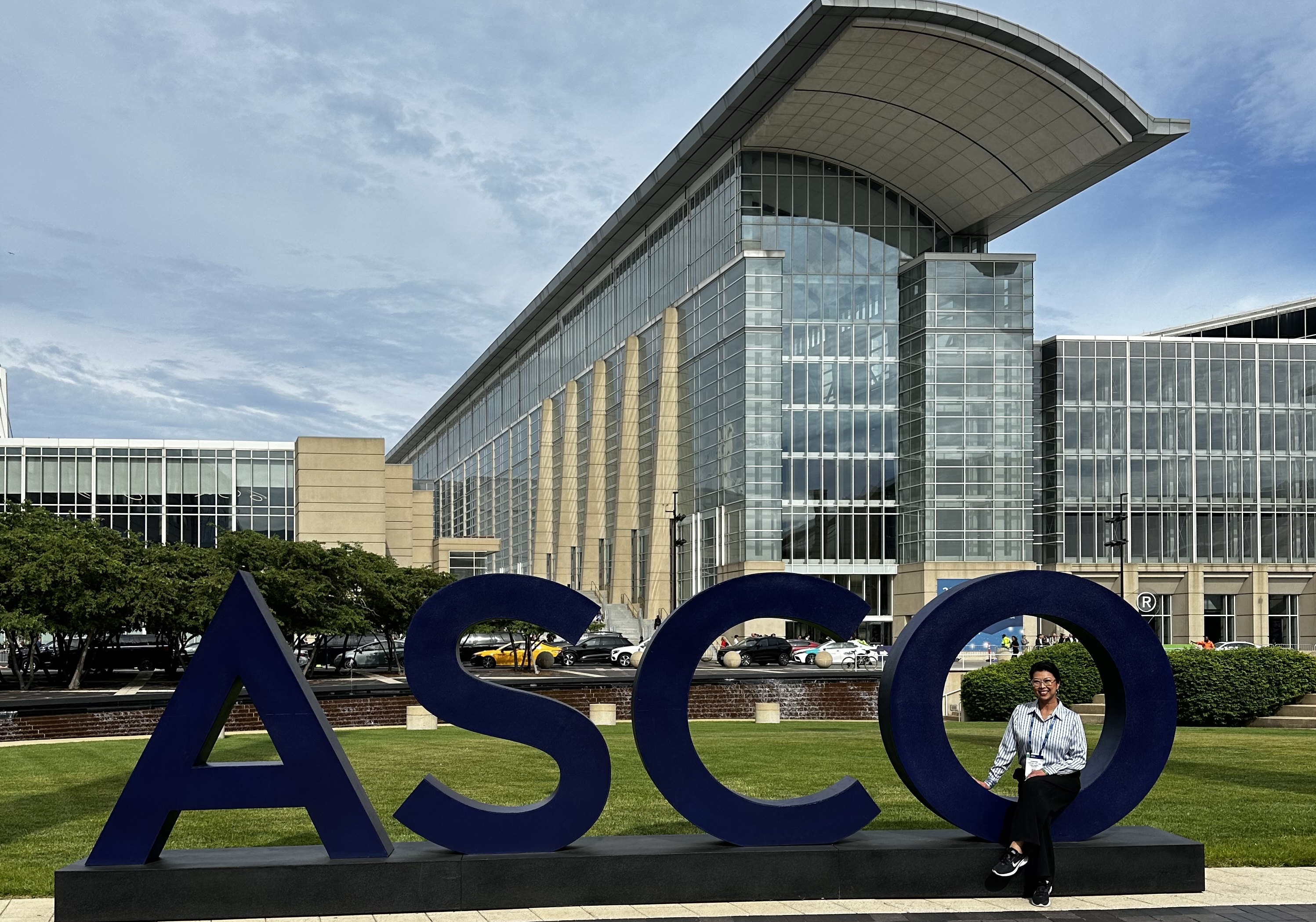
I knew ASCO was going to be big, but I was not expecting the size and volume to be what it was. An estimated 44,000+ oncology professionals from over 160 countries attended. There were educational events, poster presentations, career fairs, and over 500 exhibitors present, with the biggest names in pharmaceutical and biotechnology.
If you are a new patient advocate attending your first ASCO meeting, here are a few tips I learned that helped navigate my experience:
Hotel Shuttles: When booking a hotel, it’s helpful to find a hotel with direct shuttle services to and from McCormick Center. ASCO has a list of hotels that offer this free service, which made traveling to and from the meeting easy.
Download the ASCO app where you can view the entire conference agenda and add workshops to your schedule. The app also allows you to view speaker notes and slideshows. It’s helpful to customize your schedule, focus on the topics you are interested in, and accept that you cannot sit through everything.
Prioritize the plenary sessions: There are two plenary sessions during the conference, both of which I recommend for Advocates. The theme for this year’s meeting was The Science and Practice of Translation: Improving Cancer Outcomes Worldwide. Plenary sessions highlight groundbreaking clinical trials and the most significant, practice-changing data across all cancers.
General Registration and Advocate Lounge: Be sure to pick up your badge, map (you will need this!) and goodie bag at the registration desk. The Advocate Lounge has information, pamphlets, giveaways, and tailored workshops. They also provide free coffee, snacks, and lunch on Saturday and Sunday. It is a great place to recharge and meet other advocates.
The Exhibitor Hall features hundreds of pharmaceutical, biotechtechnology, healthcare, and nonprofit booths alongside poster abstracts and networking hubs. I enjoyed learning about Pickles Group, a nonprofit organization focused on providing education and support services for parents going through cancer treatment.
Visit the ASCO Booth for a directory of vendors and don’t be afraid to eat all the free food sprinkled throughout the exhibits.
2026 Workshop Highlights & Changemakers
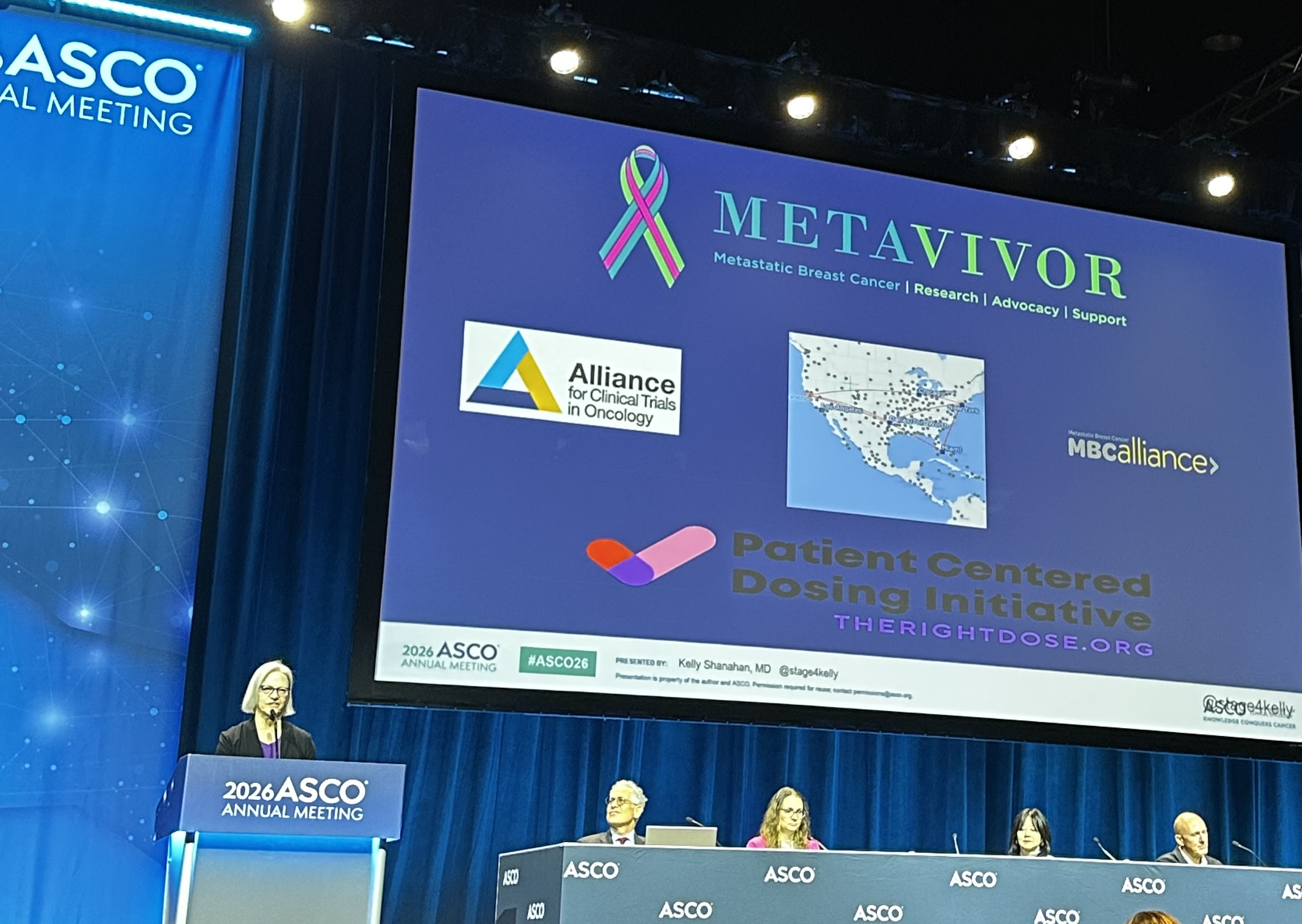
Elevating the Patient Voice: Choosing the Right Patient-Centered Endpoints in Modern Clinical Trials
As an MBC patient, this was my favorite workshop. Dr. Kelly Shanahan, President of Metavivor, spoke candidly about being diagnosed with Stage 2b Breast Cancer in her 40’s and MBC five years later.
Like many AYAs facing diagnosis, she shared the struggles of chemo-brain and neuropathy while trying to stay afloat in a demanding OBGYN practice and family responsibilities. She addressed gaps in our healthcare system, recruitment strategies to ensure greater diversity in clinical trials, and prompted a call-to-action for researchers to prioritize patient voices by including Patient Reported Outcomes as standard practice.
Perhaps the most salient point of Dr. Shanahan’s presentation was her moment of vulnerability. She relived the pain of being a mother to her (then) nine-year-old daughter and the fear of not knowing whether she would be alive to see her graduate high school. Photos of her family were projected on the giant screen.
Her voice cracked and the room fell quiet. I felt a wave of emotions surface to the top as I held back my own tears.
* * *
Empowering Voices: Confronting the Rising Incidence of Cancer in Young Adults.
Panelists from Susan G. Komen discussed how women are being diagnosed with breast cancer before many are due for their first mammogram. While there is no known single cause, research indicates metabolic health and obesity, environmental and lifestyle shifts, and structural inequalities are contributing factors.
Despite this rising incidence, the development of new drugs are allowing younger patients to live longer. Concerns about long-term survivorship and addressing the unique psychosocial needs of the AYA cancer community was at the forefront of many advocacy organizations.
Maintenance treatments, financial toxicity, sexual health and fertility, and mental health concerns were repeatedly addressed in several workshops, sparking the discussion of implementing a multi-disciplinary, wraparound model of care.
* * *
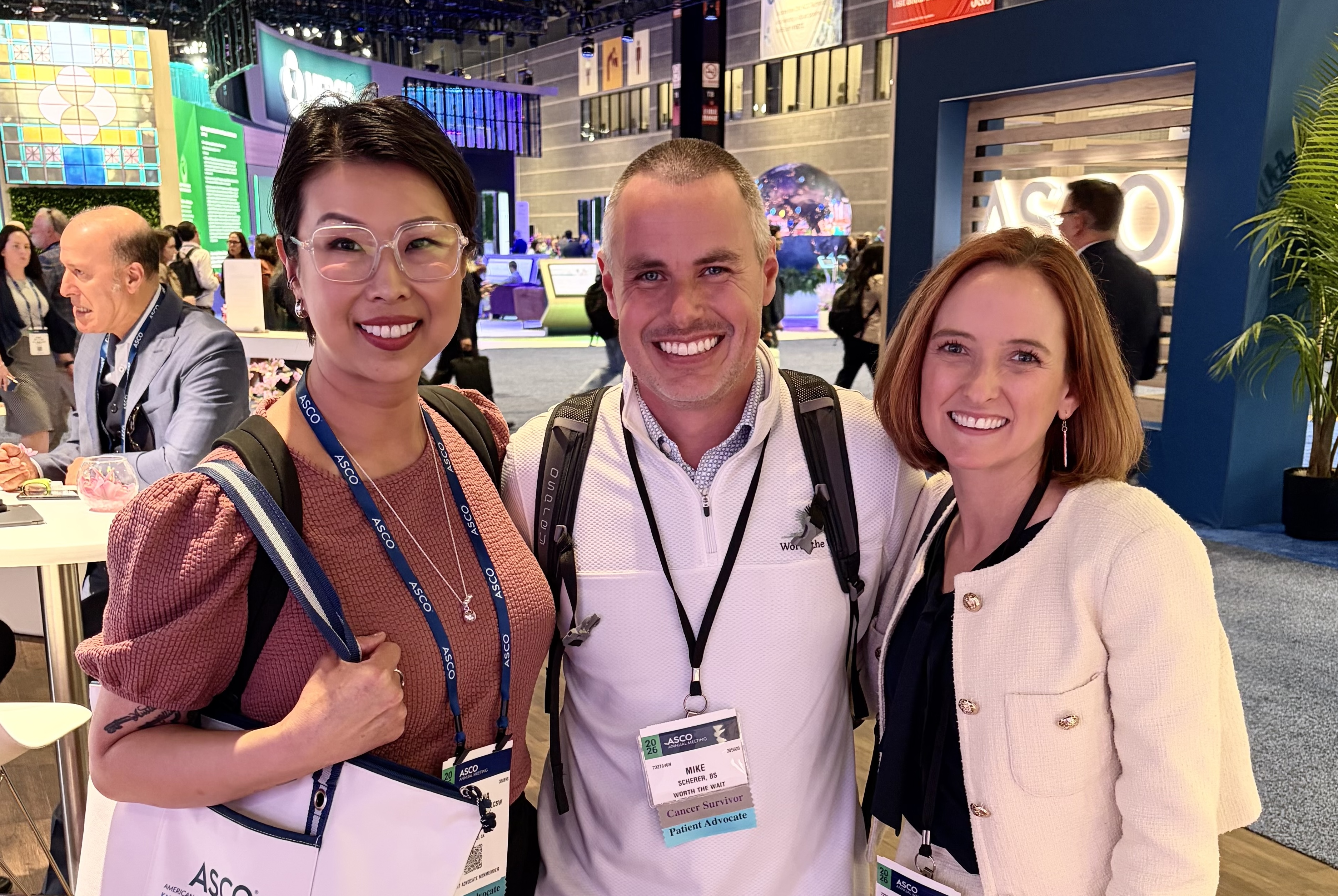
This non-profit organization is committed to helping the AYA cancer community by providing financial support and educational resources for fertility treatments, adoption, and surrogacy. Mike Sherer was diagnosed with testicular cancer at age 26. Young and newly married, he and his wife Megan were unsure if parenthood would be in their future. Fortunately, Mike was counseled early on to preserve his fertility both before surgery and again before chemotherapy, a discussion that is often overlooked for many AYA cancer patients.
After welcoming their miracle baby boy, Mike and Megan founded Worth the Wait Charity and have since awarded more than 241 financial grants and welcomed 25 Worth the Wait babies.
Centering Patient Advocate Experiences
Attending ASCO was both empowering and humbling. Looking back at my own diagnosis eight years ago, I never would’ve imagined having the opportunity to sit in the same room with the greatest minds in cancer care.
I reflected on the different treatments I’ve been on, the struggles I had to overcome, and the old life I had to say goodbye to. I thought about my doctors and nurses, the friends I have lost, and the community I have gained.
As exciting and hopeful as it was to see so many advancements in cancer happening, it still cannot undermine the lived human experience. Innovative clinical trials, novel therapies, and global trends only go so far if a patient doesn’t have access to healthcare, has debilitating side effects, or doesn’t understand the importance of how their family history comes into play.
Being an advocate gives a voice for what matters most; it prioritizes the person with cancer – the ultimate stakeholder.
You can learn more about being an advocate here.
2026 Research Wrap-Up
Several breast cancer trials were presented at ASCO with promising results for each sub-type. Patients are encouraged to discuss these findings with their medical provider for further information.
HORMONE-RECEPTOR POSITIVE (HR+/HER2-) SHIFTS:
PEPSEVERA BC (LBA1006)
SERENA-6 (LBA1007)
LIDERA BC (Abstract 502)
FOURLIGHT-2 (Abstract 1042) (this study included only postmenopausal women)
TRIPLE-NEGATIVE BREAST CANCER (TNBC) & ADC DOMINANCE
ASCENT-04 (LBA1000)
HER2-POSITIVE & EVOLVING NEOADJUVANT PLATFORMS
KNO26-004 (LBA660)
I-SPY 2.2 (LBA514)
DESTINY-Breast05 UPDATE
About the Author
Christina Thammasen
Patient Advocate
Christina was diagnosed with de novo metastatic breast cancer at 33 years old. She is a Licensed Clinical Social Worker from CA and patient advocate. She co-facilitates the YSC Virtual Hangouts and has volunteered as a Counselor On The Ground at YSC's Annual Summit.


